Staging — same data as production. Do not treat this as live.

Know what you own. Use what you keep.

Keeplore generates interact-by dates so the things you keep stay in use. Record interactions, watch what is due, and keep a clear history of item proposals. Inspired by The Minimalists' 90/90 Rule.

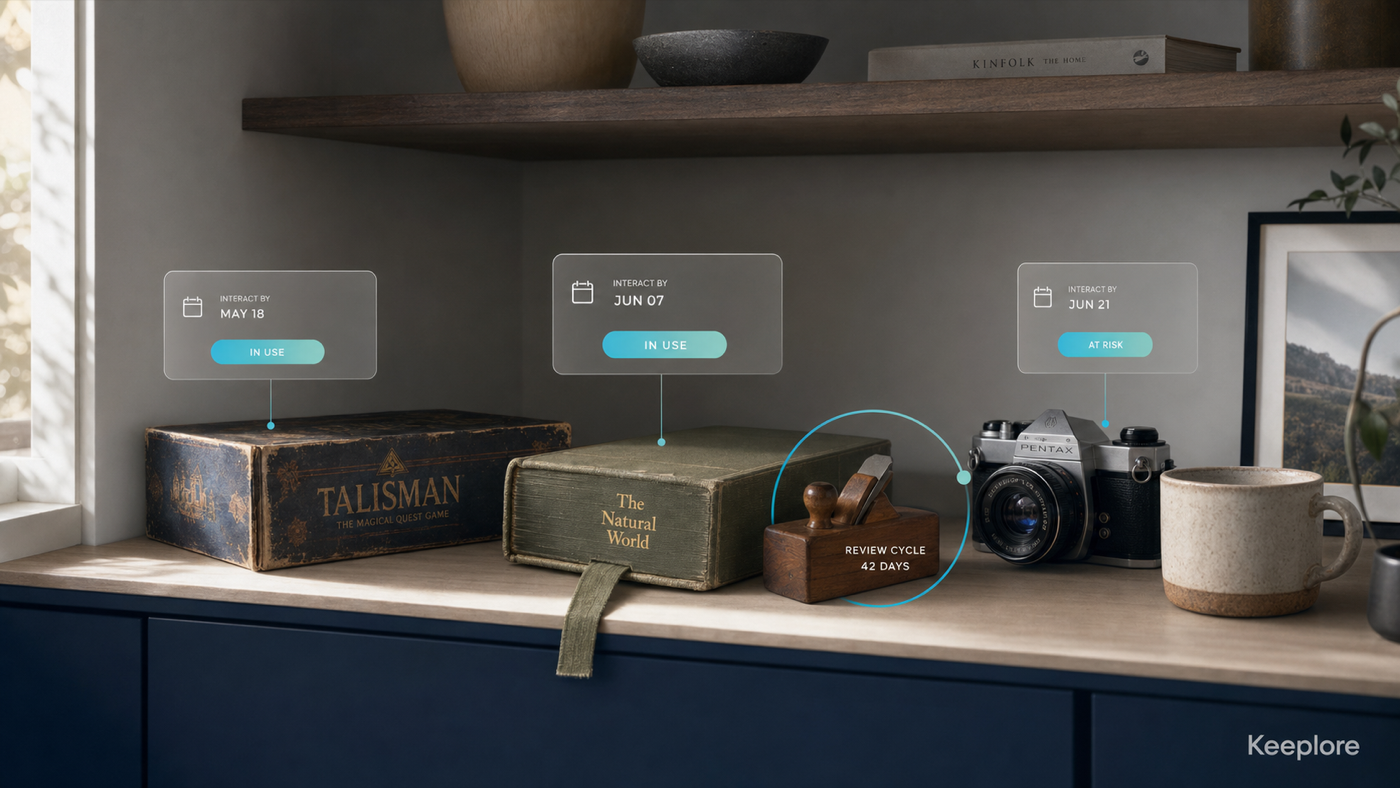
A quiet shelf of well-loved possessions with interact-by dates

Items that earn their place

Track games, books, tools, and anything else as items. Kept means you chose to keep it in the primary collection. Secondary collection is independent overflow. To get rid of is a removal flag, not the opposite of kept. Physical and digital are format flags; an item can be both.

Interact-by dates

Each kept item gets an interact-by date from your interval, 90 days by default. Never used: one interval from when you started tracking. After a use: two intervals from that use. The queue is what needs attention first.

Item proposals

When you suggest an item and the group refuses, record an explicit decline. When they pick something else without refusing, record chose something else. Unsuccessful proposals are not uses and do not restart time since last use.

A read API, plus kept

Mint a per-agent key and let a remote agent read your collection, uses, and proposal outcomes. The only write it can make is flipping kept. Read the API docs.

Three habits, one shelf

  1. 01

    Add the items you keep

    Give each item a type, an interval if it needs one, and a kept decision.

  2. 02

    Record uses as you go

    A use is an actual interaction. That is what moves the interact-by date.

  3. 03

    Review what is due

    Snooze, keep, or mark to get rid of. Proposal history informs the call; it does not replace a use.

HTTP access, scoped to one account

Keys are minted under Settings after you log in, shown once, and sent as Authorization: Bearer. They always read their own user's items. Rate limit: 60 requests per minute.